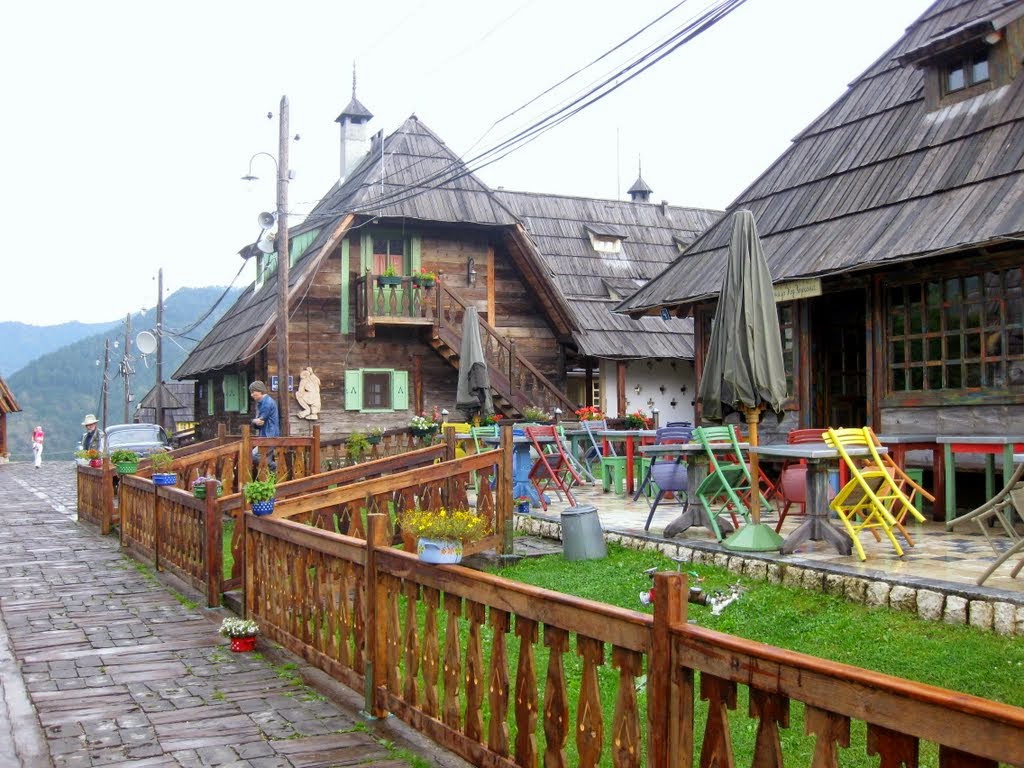
An English party site, www.ThisIsTheLife.com, has named Guca the best festival in the world.
Guca - The Best Serbian festival
Every year in August the sleepy town of Guca turns into a big party, the air is filled with the sound of trumpets and smell of grilled meat, streets with dancing and drinking people... More than 600,000 visitors make their way to the town of 2,000 people, both from Serbia and abroad. This is the best Serbian festival considering that Exit festival visit about 150.000 people and Guca Trumpet Festival in 2012 visit 600.000 people., and in 2013 about 450.000 people.

Elimination heats earlier in the year mean only a few dozen bands get to compete. Guca's official festival is split into three parts. Friday's opening concert, Saturday night celebrations and Sunday's competition. Friday's concerts are held at the entrance to the official Guca Festival building. This event features previous winners, each band getting to play three tunes while folk dancers, all kitted out in bright knitting patterns, dance kolos and oros in front of a hyped-up audience.
An English party site, www.ThisIsTheLife.com, has named Guca the best festival in the world.
Forget Glastonbury, Reading, Burning Man and Coachella: "The wildest music festival on earth is a cacophonic and crazy brass band festival that takes place every summer in the tiny Serbian town of Guča in the western region of Dragacevo".
Ознаке:
Arrangements Guca
Dejan Petrovic trumpet master
Dejan Petrovic u Vršcu
Najmlađi i višestruki pobednik Sabora trubača u Guči i prva truba sveta Dejan Petrović održaće sa svojim Big bendom veliki koncert u hali “Milenijum” u Vršcu 10. marta.
- Kao i sve dosadašnje, i ovaj koncert posvećujem svojoj ćerki Jovani, najvećoj radosti i najvećem pokretaču u životu.
S. M. - Imamo repertoar i za popularnu glumicu. Samo neka dođe, biće oduševljena - poručuje Lazarević. Treći Dejan - Jevđić, upotpuniće muzički nastup velikana trube. Najmlađi u svetu nagrada za izvođenje na limenim instrumentima Dejan Jevđić je sa orkestrom “Zao Taro lajt” prošle godine podigao Zlatnu trubu Sabora. - Radimo predano. Svakodnevno vežbamo za Guču, a mene posebno raduje činjenica da ću nastupati sa imenjacima Lazarevićem i Petrovićem.
Moramo za taj koncert da odaberemo najbolji repertoar i budemo posebno dobri. Nema sumnje, ljubiteljima trube ostaće u pamćenju planirana svirka jer nagrade najbolje govore o kvalitetu trubača - kaže Jevđić. Koncert trojice Dejana, trubačkih superstarova, novina je ove godine. Dosad su najbolji svirali na ponoćnom koncertu, a “Tri D” upriličen je kao poseban poklon organizatora ljubiteljima trube.
Dejan Lazarević: Uskoro će svetlost dana ugledati novi CD sa specifičnim balkanskim zvukom koji je Lazarević radio u saradnji sa popularnim čačanskim bendom.
- Nastupićemo verovatno u nešto modernijoj varijanti na ovogodišnjem Saboru trubača. Naravno, srpska tradicija je deo svakog našeg nastupa, ali ove godine ćemo koncert obogatiti novim numerama, veoma zanimljivim. Planirano goste, u svakom slučaju obećavamo odličnu zabavu i kvalitetan program - kaže Lazarević. On dodaje da bi ga radovalo da u Guču dođu zvučna imena poput filmske dive Džulije Roberts, pa ako se to obistini, Lazarević će kao i njegov kolega biti spreman.
Izvor: http://www.blic.rs
Najmlađi i višestruki pobednik Sabora trubača u Guči i prva truba sveta Dejan Petrović održaće sa svojim Big bendom veliki koncert u hali “Milenijum” u Vršcu 10. marta.
- Kao i sve dosadašnje, i ovaj koncert posvećujem svojoj ćerki Jovani, najvećoj radosti i najvećem pokretaču u životu.
Mnoge sam želje ispunio, ostala je još jedna, a to je svetska karijera. Želim da autentičan zvuk srpske trube pronesem svetom - kaže Dejan Petrović.
S. M. - Imamo repertoar i za popularnu glumicu. Samo neka dođe, biće oduševljena - poručuje Lazarević. Treći Dejan - Jevđić, upotpuniće muzički nastup velikana trube. Najmlađi u svetu nagrada za izvođenje na limenim instrumentima Dejan Jevđić je sa orkestrom “Zao Taro lajt” prošle godine podigao Zlatnu trubu Sabora. - Radimo predano. Svakodnevno vežbamo za Guču, a mene posebno raduje činjenica da ću nastupati sa imenjacima Lazarevićem i Petrovićem.
Moramo za taj koncert da odaberemo najbolji repertoar i budemo posebno dobri. Nema sumnje, ljubiteljima trube ostaće u pamćenju planirana svirka jer nagrade najbolje govore o kvalitetu trubača - kaže Jevđić. Koncert trojice Dejana, trubačkih superstarova, novina je ove godine. Dosad su najbolji svirali na ponoćnom koncertu, a “Tri D” upriličen je kao poseban poklon organizatora ljubiteljima trube.
Dejan Lazarević: Uskoro će svetlost dana ugledati novi CD sa specifičnim balkanskim zvukom koji je Lazarević radio u saradnji sa popularnim čačanskim bendom.
Izvor: http://www.blic.rs
Ознаке:
Guca Music
Serbian History Trumpet Tradition
Serbian History Trumpet tradition
Dragacevo, which used to be a rural region, experienced strong economic and general educational and cultural development after 1950, and mostly in the first decade of the 21st century, first of all thanks to the Trumpeters Festival.
The capital of modern trumpeting - Guca, is relatively small, and the trumpet was first played as far ago as 1831. Before nearly two centuries Milos Obrenović ordered the establishment of a "Principle's Serbian band" in Kragujevac, and that the first brass band be led by Josip Slezinger (1794-1870), a man from Sombor, who in those times was the first musically literate expert in Serbia. "Oberlautar" Mustafa, a man who played the violin and "zurle" (zurna), was until then amusing the Serb ruler and his entourage "and was amusing also even foreigners who did not have much understanding for Turkish music". Immediately upon his arrival in Kragujevac he started to organize the band. Since he lacked in skilled musicians, he asked the Principle to arrange that young man from among the population be found, who have talent and will to do this job. Milos promptly ordered that each county delegates five young men. And, so it started. Although it did not always run smoothly, they learned to play the new "golden" instruments, by playing the round-dances and songs which they knew and were familiar with them, but learning also everything that maestro J. Slezinger was teaching them in the then Serbian capital Kragujevac.
History of the Serbian Trumpet Tradition
Almost two centuries passed by, there were many outstanding military brass bands and band leaders from the regiments and divisions. However, only in the mid 19th century were the foreign musical and cultural influence getting stronger; they can be identified at the beginning of the new era in the folk music of Dragacevo and were particularly strong in regard to trumpet music and homophonic multi-part singing , i.e. in singing "na bas". How the brass bands were emerging we heard from spontaneous statements of modern Dragacevo musicians. It is known in Dljina that their oldest trumpeter "was a guy named Cebic who was playing before World War I… And he himself inherited it from the past times. "In Goracici the first orchestra was founded by the Davidovic brothers from Dragacica "probably sometimes about the times of World War I, and this band included only four musicians". Also, the story goes that "in Rti the band leader and first trumpet was Milisav Kostic–Tralja, and his today's heirs are trumpeters playing in the Srecko Obradovic orchestra". And so we come also to the trumpeter Desimir Perisic from Goracići and the winning orchestra at the First Festival in Guca in 1961.
The songs are usually based of two-bar motives and melodies, mainly of two part structure consisting of 4 to 5 tones.
All around the globe, at all meridians, on all continents, most probably also on the Antarctica, it is known that Guca and Dragacevo are famous for trumpet music. The trumpet can be heard, loudly and gently, also in the biggest cities of the world and recordings of the trumpeters' music have reached the outer space, where the cosmonauts were amusing themselves.
With all the other flags, the Dragacevo Trumpeters Festival's flag has been flying since 2000 also on the highest mountain peak of the world, Mount Everest, on the Himalayas (8,848 m). It was placed there by the first Serb – a man from Dragacevo, Dragan Jacimovic from Puhovo.
To say it in modern language, Dragacevo Trumpeters festival is one of the most famous Serbian brands. And… trumpet music took for the world from the villages of Dragacevo, via Guca. Via Dragacevo Trumpeters Festival at which, for full five decades, the blessed musicians – the golden Serbian trumpeters – gathered in flocks.
Dragacevo, which used to be a rural region, experienced strong economic and general educational and cultural development after 1950, and mostly in the first decade of the 21st century, first of all thanks to the Trumpeters Festival.
The capital of modern trumpeting, Guca, is relatively small, and the trumpet was first played as far ago as 1831. Before nearly two centuries Milos Obrenovic ordered the establishment of a "Principle's Serbian band" in Kragujevac, and that the first brass band be led by Josip Slezinger (1794-1870), a man from Sombor, who in those times was the first musically literate expert in Serbia. "Oberlautar" Mustafa, a man who played the violin and "zurle" (zurna), was until then amusing the Serb ruler and his entourage "and was amusing also even foreigners who did not have much understanding for Turkish music". Immediately upon his arrival in Kragujevac he started to organize the band. Since he lacked in skilled musicians, he asked the Principle to arrange that young man from among the population be found, who have talent and will to do this job. Milos promptly ordered that each county delegates five young men. And, so it started. Although it did not always run smoothly, they learned to play the new "golden" instruments, by playing the round-dances and songs which they knew and were familiar with them, but learning also everything that maestro J. Slezinger was teaching them in the then Serbian capital Kragujevac
Almost two centuries passed by, there were many outstanding military brass bands and band leaders from the regiments and divisions. However, only in the mid 19th century were the foreign musical and cultural influence getting stronger; they can be identified at the beginning of the new era in the folk music of Dragacevo and were particularly strong in regard to trumpet music and homophonic multi-part singing , i.e. in singing "na bas". How the brass bands were emerging we heard from spontaneous statements of modern Dragacevo musicians. It is known in Dljina that their oldest trumpeter "was a guy named Cebic who was playing before World War I… And he himself inherited it from the past times. "In Goracići the first orchestra was founded by the Davidovic brothers from Dragacica "probably sometimes about the times of World War I, and this band included only four musicians". Also, the story goes that "in Rti the band leader and first trumpet was Milisav Kostić–Tralja, and his today's heirs are trumpeters playing in the Srecko Obradovic orchestra". And so we come also to the trumpeter Desimir Perisic from Goracići and the winning orchestra at the First Festival in Guca in 1961.
The songs are usually based of two-bar motives and melodies, mainly of two part structure consisting of 4 to 5 tones. The vigorous folk round-dances from the western regions are characterized by occasional pauses of the leading trumpets, with the basses taking over the leading tune of the leading trumpets, highlighting the basic harmonies. Also, we will notice that southern folk dances are usually characterized by oriental music, in the so-called "aksak" rhythm. This is especially emphasized with the "performance" of the drummer, who expertly combines larger "cukan" (right hand) strokes with those of the thinner stick (left hand, on the edge of the drum, skillfully stressing the changes of double and triple meter in the specific rhythmical formulas and combinations (8/8; 7/8; 9/8 etc.), especially in the characteristic dances – songs called "chochek". Then, spontaneously and ravishingly, genuinely enjoying in the music, dance only those who truly know how to do it. In the eastern region a big number of folk dances of the "Batrna" (ancient dance) type and "Stara Vlajna", i.e. "Timocka Rumenka" or "Svrljiski laskavac", are preserving the genetic features of the Vallah or Serb Hora dancing, when the dancers are crossing their hands and holding each other by the belt. And all Serbian songs and dances have up to five tones, while Vallah melodies are more diversified and with an occasional alternation of the slow parts with the usually faster refrain. Singing with trumpet accompaniment is gaining in popularity nowadays here with us. Like the first folk trumpeters from the times of Milos, contemporary ones are also mainly autodidacts having keen hearing, and are playing a huge repertoire of songs and dances by heart, and by the ear, improvising their interpretation spontaneously and from their soles and hearts.
With the first orchestras, their members evolved as musicians and their number was invreasing. At the beginning the orchestras had five musicians, and the contemporary orchestras usually have up to ten musicians (three to four ''B'' trumpets, three bass flugelhorns, one bass trumpet – helicon or euphonium, and, finally, snare drum and large drum with cymbals. Three regions clearly identified themselves by the style of their music, and are today three famous centers with the best trumpeters in Serbia today. Although the trumpet is not as deeply rooted in our people like the vocal music tradition, the fact is that those active in the field of culture have four decades ago broke the ground for trumpet music in tiny Guca. Since then, like awakening from a dream, trumpet music grew very quickly in those areas of western, eastern and southern Serbia in which the trumpet seed probably had already been thrown and did exist, and it also woke up during so many decades in the center of Sumadija, where its seed was for the first time thrown in the far away year 1831.
Day trip to Ovcarsko Kablar canyon
Day trip to Ovcarsko Kablar canyon - Trumpet Festival
If you interesting for reservation of apartment in Guča, you can contact us by email on guca@booking-hotels.biz or calling number +381-64-555-8581.
Aranžman uključuje:
It is located in central Serbia, where the Morava river between the mountains and Shepherd Kablar gorge cuts an imposing shadow scale in forest on the banks of the river, the small plateau close to the rocks and hiding the 11 medieval monasteries, the unique place where there are time when they occur. On the left side of the Western Morava are the Annunciation, Ilinje, Savinja Nikolje, Assumption and Jovanje, and on the right the Temple, Trinity, Transfiguration, Assumption and the Presentation.
The gorge is located Shepherd and Spa. After a stormy night in Guca, you'll benefit from a break and rest in the beautiful nature that has not been disturbed by human factor. Excursion program: Departing from Guca in 8:00 am, comfortable tourist bus. Arrival at the Spa Shepherd around 8:45 pm, a tour (in a tourist guide) very small town, visiting the monastery of the Transfiguration, Presentation, Ascension, Nikolje.
Driving through the canyon on a raft in the Western Morava. Lunch at the restaurant "House" (the menu is arranged in advance if you wish), located on the banks of the river. Ability to visit Wellness center or outdoor swimming pool with thermal water. During the individual time, lasting two hours. Departing in Guca at 17.00 h. Arrival in Guca in 17:45.
Arrangement includes:
- Transportation of tourist bus
- Admission to the National Park
- Lunch at the restaurant "Dom"
- Drive-raft
-Tourist Guide
- Organization
- Transportation of tourist bus
- Admission to the National Park
- Lunch at the restaurant "Dom"
- Drive-raft
-Tourist Guide
- Organization
If you interesting for reservation of apartment in Guča, you can contact us by email on guca@booking-hotels.biz or calling number +381-64-555-8581.
Izlet Ovčarsko Kablarska klisura
Ovčarsko Kablarska klisura nalazi se u centralnom delu Srbije, gde reka Morava teče između planina Ovčar i Kablar. U ovoj klisuri unedrilo se 12 svetinja. Na levoj strani zapadne Morave, pod Kablarom su manastiri: Blagoveštenje, Ilinje, Jovanje, Nikolje i Uspenje, a pod Ovčarom su: Vavedenje, Vaznesenje, Preobraženje, Svete Trojica i Sretenje.
Ilinje je jedini neobnovljen manastir, dok ostali žive istinsku renesansu pravoslavlja – ispunjeni monaškim molitvama, a mesta su hodočašća vernika i turista. Pored manastira, u istom prostoru nalaze se još dva svetilišta: crkva Svetog Save i pećina Kađenica, svojevrsni sakralno-memorijalni objekat.
Program:
- Polazak iz Guče u 8:00, udobnim prevozom, autobus, mini van, kombi ili taksi prevoz u zavisnosti od broja prijavljenih osoba.
- Dolazak u Ovčar banju oko 8:45, poseta manastira Preobraženje, Vaznesenje i Nikolje.
- Vožnja splavom kroz kanjon na Zapadnoj Moravi. Ručak u restoranu "Dom", koji se nalazi na obalama reke.
- Mogućnost posete Vellness centra ili otvorenog bazena sa termalnom vodom.
- Polazak za Guču u 17.00 h. Dolazak u Guču u 17:45.
Aranžman uključuje:
- Transport
- Poseta Nacionalnog parka
- Ručak u restoranu "Dom"
- Vožnja splavom
- Uslugu turističkog Vodiča
- Organizacija aranžmana
Ukoliko ste zainteresovani za rezervaciju smeštaja u Guči tokom Sabora trubača, možete nas kontaktirati na email adresu guca@booking-hotels.biz ili nas pozvati na telefon: +381-64-555-8581.
Mokra Gora Program - 8 days
Brace yourself for a unique Serbian experience! Visit the beautiful mountainside of Western Serbia and enjoy the renowned ethno villages and specialties. Enrich yourselves with a taste of life in the Balkans. Take a piece of Serbia with You.
Tour highlights:
- scenic landscapes and gentle slopes of Zlatibor,
- Zlatibor Lake,
- scenic hiking routes to Čigota filled with pinewoods, therapeutic for the people with thyroid gland problems,
- mountain and River Tara with its scenic views and crystal clear water,
- monastery and Pension Soko Grad,
- famous scenic railroad Šarganska Osmica,
- "Wooden City" Mećavnik built by Emir Kusturica,
- 200 - year old Ethno Village Sirogojno,
- handmade arts and crafts form Sirogojno, which are the latest fashion trend in the ethno styles,.
- Stopić Cave,
Day 1: Saturday
Arrival at Belgrade Airport. Departure for Zlatibor with quick stop for lunch. Arrival at Zlatibor. Accomodation in Villa "u Lugu". Dinner and rest.
Day 2: Sunday
Breakfast. Sightseeing on Zlatibor with a shuttle with several stops. Lunch and rest. Hiking tour to Cigota. Dinner and rest.
Day 3: Monday [Field Trip 1]
Breakfast. Departure for Mokra Gora. Ride on the scenic railroad Sarganska Osmica, which was the location for the filming of Emir Kusturica movie Life is a Miracle. Arrival at Mecavnik, "Wooden City" which was designed and constructed by the famous director. Departure for Bajina Bašta with a stop for sightseeing of the lake. Return to Zlatibor. Dinner and rest.
Day 4: Tuesday [Field Trip 2]
Breakfast. Departure for Sirogojno. Tour of the Ethno - Village and the museum. Shopping for handmade arts and craft, for which this area is famous for. Ethnic lunch and return to Zlatibor with a stop for the tour of Stopica Cave. Dinner and rest.
Day 5: Wednesday [Field Trip 3]
Breakfast. Departure for Soko Grad near Ljubovija with a visit to the monastery. Lunch. Trip to Kozja Stena, the most scenic view from Mt. Tara. Return to Zlatibor. Dinner and rest.
Day 6: Thursday
Breakfast. Free time before lunch. After the lunch a scenic hiking tour. After the hiking tour some rest and dinner. Good Bye Party and rest.
Day 7: Friday
Return to Belgrade. Lunch in Belgrade. Dinner and Goodbye Party on one of the famous rafts in Belgrade. Rest.
Day 8: Saturday
Early breakfast. Transfer to Belgrade Airport
What else:
- you will eat healthy food and as a souvenir you will take some specialties with you,
- clean and fresh mountain air at high altitudes which is of benefit for the people with respiratory problems,
- participate in health and fitness program on Čigota,
- take a bath or drink water from crystal clear rivers on Tara and Zlatibor,
- have a relaxing holiday in the parts of Serbia where nature is unaffected by industrial development,
- surprise gift.
Tour details:
- 7 Nights with Half Board,
- 8 lunches,
- 2 Transfers,
- 3 Field Trips.
Guide Service: 2 persons, Tickets and Fees for all locations.
A unique Serbian experience awaits you. Unique tours offered by Outdoor open the doors to the hidden treasures of Serbian nature and culture. Visit the crossroads of Western and Eastern civilization and the region that forged much of the European history. Once You leave, take a piece of Serbia in Your heart. Program is based on minimum 6 persons.
Contact: +381-64-555-8581;
Email: guca@booking-hotels.biz;
Brace yourself for a unique Serbian experience! Visit the beautiful mountainside of Western Serbia and enjoy the renowned ethno villages and specialties. Enrich yourselves with a taste of life in the Balkans. Take a piece of Serbia with You.
Tour highlights:
- scenic landscapes and gentle slopes of Zlatibor,
- Zlatibor Lake,
- scenic hiking routes to Čigota filled with pinewoods, therapeutic for the people with thyroid gland problems,
- mountain and River Tara with its scenic views and crystal clear water,
- monastery and Pension Soko Grad,
- famous scenic railroad Šarganska Osmica,
- "Wooden City" Mećavnik built by Emir Kusturica,
- 200 - year old Ethno Village Sirogojno,
- handmade arts and crafts form Sirogojno, which are the latest fashion trend in the ethno styles,.
- Stopić Cave,
Day 1: Saturday
Arrival at Belgrade Airport. Departure for Zlatibor with quick stop for lunch. Arrival at Zlatibor. Accomodation in Villa "u Lugu". Dinner and rest.
Day 2: Sunday
Breakfast. Sightseeing on Zlatibor with a shuttle with several stops. Lunch and rest. Hiking tour to Cigota. Dinner and rest.
Day 3: Monday [Field Trip 1]
Breakfast. Departure for Mokra Gora. Ride on the scenic railroad Sarganska Osmica, which was the location for the filming of Emir Kusturica movie Life is a Miracle. Arrival at Mecavnik, "Wooden City" which was designed and constructed by the famous director. Departure for Bajina Bašta with a stop for sightseeing of the lake. Return to Zlatibor. Dinner and rest.
Day 4: Tuesday [Field Trip 2]
Breakfast. Departure for Sirogojno. Tour of the Ethno - Village and the museum. Shopping for handmade arts and craft, for which this area is famous for. Ethnic lunch and return to Zlatibor with a stop for the tour of Stopica Cave. Dinner and rest.
Day 5: Wednesday [Field Trip 3]
Breakfast. Departure for Soko Grad near Ljubovija with a visit to the monastery. Lunch. Trip to Kozja Stena, the most scenic view from Mt. Tara. Return to Zlatibor. Dinner and rest.
Day 6: Thursday
Breakfast. Free time before lunch. After the lunch a scenic hiking tour. After the hiking tour some rest and dinner. Good Bye Party and rest.
Day 7: Friday
Return to Belgrade. Lunch in Belgrade. Dinner and Goodbye Party on one of the famous rafts in Belgrade. Rest.
Day 8: Saturday
Early breakfast. Transfer to Belgrade Airport
What else:
- you will eat healthy food and as a souvenir you will take some specialties with you,
- clean and fresh mountain air at high altitudes which is of benefit for the people with respiratory problems,
- participate in health and fitness program on Čigota,
- take a bath or drink water from crystal clear rivers on Tara and Zlatibor,
- have a relaxing holiday in the parts of Serbia where nature is unaffected by industrial development,
- surprise gift.
Tour details:
- 7 Nights with Half Board,
- 8 lunches,
- 2 Transfers,
- 3 Field Trips.
Guide Service: 2 persons, Tickets and Fees for all locations.
A unique Serbian experience awaits you. Unique tours offered by Outdoor open the doors to the hidden treasures of Serbian nature and culture. Visit the crossroads of Western and Eastern civilization and the region that forged much of the European history. Once You leave, take a piece of Serbia in Your heart. Program is based on minimum 6 persons.
Contact: +381-64-555-8581;
Email: guca@booking-hotels.biz;
Ознаке:
Guca Arrangements,
Mokra Gora,
Sargan Eight,
Sirogojno,
Zlatibor
Grunula je truba
Grunula je truba - Branko V. Radicevic

Sve se izgleda menja. Sabor ostaje isti. Kao element. Zemlja. Vazduh. Voda. Pečenje. Lebac i slanina. Beli lukac. Kolovođa i kec. Prvi i poslednji u kolu. Sabor je čudo. I to čudo nad čudima. Trebalo je, pre trideset i pet godina, promarširati ulicama Guče. U anteriji. Sa šajkačom na glavi. U prisustvu vlasti. U pratnji trubača.
To je čudo. Taj pohod koji traje. Koji ne prestaje. Od Sabora do Sabora. Od grada do grada. U kasno leto. Pred jesen. Dumbara bubanj. Igra kolo. Ali, molim vas, zamislite: kako je to bilo pre trideset i pet godina. U prikradici. U prekorici. Kao inačica. Tek će narasti inat. Tek će se zainatiti pravi inat. U sveopštoj sumnji.
Prikradalo se. I pripremalo veliko kolo. U prikradici. Naizgled naivno i nevešto. Trebalo je imati hrabrosti. I odoleti pokudicama. Šta će vam to tu? I zašto će vam baš tu? I šta će tu Dragačevo? I zar se to sme u Dragačevu? I šta će drugi reći? I kako će se drugi ponašati? I ko će za to odgovarati? I šta ako se to u nešto neprilično izrodi? Opasno je! Nije vreme! Zašto baš trube? I šta će tu trube? Pa to podseća na ratove! I kakvi su to bili ratovi! Ima ratova i ratova. Osvajačkih, napadačkih, tlačiteljskih, nepravedenih, opakih i zlovremenih.
Šta će tu trube ? Na šta nas podsećaju? Na nekakva knjaževstva i kraljevstva?
Nije Srbin izmislio trubu. Šta će truba u kolu? Ima ona preča posla. Zna se njeno mesto. Ispraća u ratove. I maršira s vojskama. Jedan, dva. Pod komandom. Jedan, dva. Ne može u šest koraka.
I grunula je. U Dragačevu. Kao izazov. I prkos. Prisetila. Podsetila. Promladila. Dahnula vedrinom. I nadom. Jer narod igra. Ima nade. Jer narod igra. Dobro je kad narod igra. Zasvadbariće jesen. Rađaće se deca. Oživeće njive i livade. Biće leba i slanine. Zaratariće zemlja. Neće zaratovati. Ona će zaratariti. Jer bog Perun, vrhovni srpski bog, nije bog ratova, već berićeta, bog plodnosti. On opominje gromovima i munjama. On upravlja zemljom i nebesima. I šalje kišu na žednu zemlju. Oplođuje. Preporađa. Omlađuje. Stvara. Daruje.
Trebalo je lukavo, polako, strpljivo, uz neophodne dodvorice i nepotrebne pristanke, očuvati saborovinu, koja je postala dadž, napajala ljude verom i nadom da još ima zdravlja i da nije sve prošlo i da će se živeti i ploditi.
Zaigralo je veliko saborsko kolo. I porodio se veliki, opštenarodni inat. Truba se pretvorila u čudo. Oslušnite je. Drma. Čućete što nikad niste čuli. Čućete ako ste posustali. Čućete ako ste posumljali. Ima spasa. Ima nade. Čućete ako ste se odrodili. Čućete ako se još niste porodili. Čućete ako ste se zaplodili.
Moj glas je slab. Nemam snage da nadvičem trubu. Sve što sam govorim, kazaće vam truba. Ona neprestano samo o tome trubi. Treba je čuti, slušati i razumeti. Ona umesto nas progovara. Jednog dana, ko zna kada, došla je među nas iz dalekog belog sveta. I progovorila je našim glasom. Baš kao da je svirala. Kao da se usvirala. I uguslila. Videli smo je na slikama posvećenim Božijim prostorima. Anđeli navešćuju dolazak. Strašnog suda. Ona se potpuno pripitomila u Dragačevu. Ne poziva na juriš. Neće u rat. Ne navešćuje propast sveta. Dolazak Strašnog suda. Započinje kolo. Svetkuje. I razastire radost. I zato je dobrodošla. Kao preporoditeljka. Na radost. I veselje.
Branko V. Radičević, pesnik, jedan od osnivača Sabora
Slovo domaćina na otvaranju 30. Sabora 1990.
Cudo zvano Guca by Momo Kapor
Momo Kapor
Ko je mogao i da pomisli da će zov trube uspeti da okupi, ni manje ni više, šesto hiljada ljudi i da će na pustim poljanama Guče nići, kao u kakvom ratnom pohodu, polje šatora? A svi su zaboravili, niko ni da pomene, da je čitavu tu priču pre četrdeset devet goina, 1960. godine, započeo jedan pesnik, Branko V. Radičević, zvani Mačista, koji je proslavio Srbiju, a posebno Čačak, odakle je rodom, svojim pesmama i poemama.
Niko da se seti Mača, koji je sa nekolicinom prijatelja sakupio tri-četiri sirota duvačka orkestra koji su se potucali po Srbiji po svadbama i sahranama, više gladni nego siti, i da ih je doveo u portu ispred crkve Svetih arhangela Mihaila i Gavrila u Guči da tu sviraju ceo letnji dan do podne, a onda, bogami, i uveče, i sve tako, puna tri dana.
Vraćajući se u Beograd, Mač je natovario u kola i teški krajputaš iz okoline Čačka, prvi koji je ikada videla prestonica, uvevši tako u modu staru tradicionalnu skulpturu, i to obojenu, dok su se intelektualci divili rupama Engleza Henrija Mura. E, pa lepo bi bilo da je bilo ko od zvaničnika makar i pomenuo Mačistu, Branka V. Radičevića, ali Srbija je to: ona lako zaboravlja. Uostalom, pokojni Mačista ima vremena da čeka da ga pomenu.
Sva muka i bes, sva lepota i tuga, sva radost i muzika, koje se sakupe za godinu dana u Srbiji, prve nedelje avgusta šiknu u nebo kroz blistava grla truba na Saboru u Guči. To je događaj na koji seljačka Srbija nestrpljivo čeka punih godinu dana. Tada Guča, varošica u brdima, postaje svetska prestonica trube.
Ne zna se pouzdano kada su se i kako trube primile u Srbiji, koja je odvajkada poznavala uglavnom gusle, pastirske svirale, frule i dvojnice, ali je to verovatno bilo posle srpsko-turskih ratova potkraj devetnaestog veka, kada su se četni i pukovski trubači vratili u svoja sela, donevši sa sobom olupane, ulubljene i izubijane, a često i kuršumima probijene trube, kojima su, do tada, pozivali na juriše i svirali povečerja. Ratovi koji su usledili početkom novog veka znatno su povećavali, sem mrtvih, i broj truba. Zbog toga je u njihovom tonu još uvek najizrazitiji ratnički zvuk, poklič na pobedu ili smrt – tanki, mesingani lim, naliven melanholičnom mrenom povečerja.
Donosili su ih kao dragocenosti, pažljivo uvijene u krpe i futrole, sašivene od uvoštenih šatorskih krila, u svoja zabita sela. Odmotane i pažljivo izglancane blesnule bi, usred bode siromašnih izbi, sjajem zlatnog roga. Čuvali su ih brižljivo i negovali, zasviravši katkad u sutonu kolce ili posmrtni marš, sve dok ne postadoše pravi virtuozi, ravni, ako ne i bolji, od meksičkih marijačija. Svojim instrumentima postizali su i najviše, gotovo nemoguće tonove, ali su bili u stanju i da nežno, trubama, bekrijama šapuću u uvo uspavanke. I kao što je šljiva madžarka u ovom delu Srbije pronašla najpogodnije tlo za svoje sokove, isto tako se primila i truba, do tada nepoznata srpskim muzičarima. Pokazalo se da se nijednim muzičkim instrumentom, čak ni violinom, za koju su bili majstori Cigani, ne može bolje izraziti suština bića ovog naroda, ponekad kroz krik, često kroz suze, jecaje ili promukli smeh, a najčešće kroz obesne taktove narodnih kola, punih razuzdane radosti.
I sada su se, sa svih strana Srbije, sjatili svi u Guču. I oni koji su tek nedavno prvi put dunuli u pisak, i oni što su živeli od sviranja po svadbama, sahranama, vašarima i zabitim krčmama. Bilo je među njima svakojakih; onih u seljačkim gunjevima i opancima-šiljkanima, sa šajkačama na glavama, i drugih, što su već stekli ime, pa se odenuli u svilene košulje jarkih boja i širokih rukava, prsluke i lakovane cipele. Došli su tu odršani orkestri bez sluha i imalo muzikalnosti, uvežbani ansambli, koji su već nastupali na televiziji i igrali po filmovima, ciganski orkestri sa rumunske i bugarske granice i družine sa imenima nagrada ispisanim na bubnjevima pozlaćenih činela – čak i ansambl američkih marinaca! u Guču su se sjatilii rojevi domaćih i stranih filmskih i televizijskih ekipa da zabeleže kamerama još jedan potpuno nepredvidljivi uzlet srpskog duha. Već prve noći, podanici prestonice trube, zaplitali su jezicima i provlačili se kroz stolove pod šatrama u osmicama, opijeni raskošnim zvukom i pićem što se nemilice točilo na svakom koraku. Najbrojniji među njima došli su iz obližnjih gradova i Beograda, a nije bilo malo ni onih što su stigli čak iz Evrope i Amerike, da nedelju dana traže i pronalaze svoje zaboravljene korene. Samo na ovom mestu mogle su da se susretnu leptir-mašne sa šajkačama, mlade lepotice sa slavnim, pijanim starcima, dame, odevene po poslednjoj pariskoj modi, sa zabrađenim seljankama; pod šatrama koje su bazdile po rakiji, pečenom mesu i duvanskom dimu što je naprosto kuljao iz njih. Svaka šatra postala je improvizovana gostionica sa rasparenim stolicama i sastavljenim stolovima prekrivenim čaršavima, u kojoj su se smenjivala i nadmetala, naizmenično, po dva-tri orkestra duvača. Pred jutro, iskolačenih očiju, okrenuli bi svoje trube jedni naspram drugih, poput tromblonskih bacača zvuka, izduvavajući svu svoju nagomilanu snagu i bes kroz njih, nadmećući se ko će koga da nadjača i otera sa poprišta. Lepotice su se pele na stolove i igrale po njima (zvali su ih stolovače), a muškarci padali u dert, razvezivali kravate i opuštali kaiševe ispod nabreklih trbuha. Ništa se, naime, ne slaže i ne prožima tako dobro kao šljivovica iz tog kraja i svirka duvača-Dragačevaca.
Oko šatri su se okretali danonoćno ražnjevi sa prasićima i jaganjcima a na nekoliko mesta i teški volovi, sa kojih su vešti majstori noževima odsecali ispečeni sloj, i dok se pekao novi, prodavali još vrele režnjeve volujskog mesa u rasečenim lepinjama.
Što se tiče ovogodišnje Guče, zapanjile su me dve stvari: prva, da nije bilo nijednog slučaja svinjskog gripa, koji hara planetom, a to iz dva razloga – najpre, zbog toga što su gosti pojeli svu raspoloživu svinjetinu, tako da grip nije stigao da se zapati u njoj, a i to je najzad dokazano, da bacili gripa umiru na metar i sedamdeset pet centimetara udaljenosti od onoga koji je popio tri litra vina ili gajbu piva. Tako je slučajno i pronađen najbolji serum protiv gripa. Druga stvar koja me zapanjuje, po ko zna koji put, jesu pijani Slovenci, koji dokazuju da nema šta da tražimo u Evropskoj uniji, jer da je tamo dobro, ne bi dolazili kod nas u Guču da se provedu pod sloganom ''Samo jednom se živi!'' Kako im je tamo, najbolje se vidi iz načina na koji piju: oni se opijaju mračno i depresivno, bilo čim što im dođe do ruku, samo da pobegnu od načina života kojim žive.
Ono što je potpuno nelogično u Guči kuva se u velikim zemljanim loncima, i zove se svadbarski kupus. Kiseo kupus u avgustu, to me zaprepašćuje. Da li je to onaj poplesnivili kupus, preostao od zimus, ili su ga zakiselili na brzu ruku, ostaće zauvek tajna. Zaista ga je perverzno jesti usred leta.
Primetio sam još da Guča, i pored svoje popularnosti, polako ali sigurno gubi svoju izvornu dušu, približavajući se američkom Vudstoku ili novosadskom Egzitu. Njena buduća propast počela je prisustvom u orkestrima saksofona, koji je do tada bio nepoznat instrument u srpskoj narodnoj muzici, a nastavlja se sa sve prisutnijim klavijaturama. Još samo nedostaju orgulje i harfistkinja sa šajkačom, pa da stvar bude potpuna. Još nešto: u repertoar se sve više uvlače belosvetski šlageri od Maj veja do Kondorovog leta – kao , možemo i to. Za iduću godinu Guča je najavila takmičenje za prvu trubu sveta. Šteta što su umrli Dizi Gilespi i Majls Dejvis – oni bi sigurno došli da se takmiče sa Salijevićima.
Kao što je ono prase pitalo, ima li života posle Đurđevdana, tako se i mi pitamo, ima li ga posle Guče?
Momo KAPOR, književnik i slikar
Nin, Beograd, 20. avgust 2009.
Subscribe to:
Comments (Atom)